




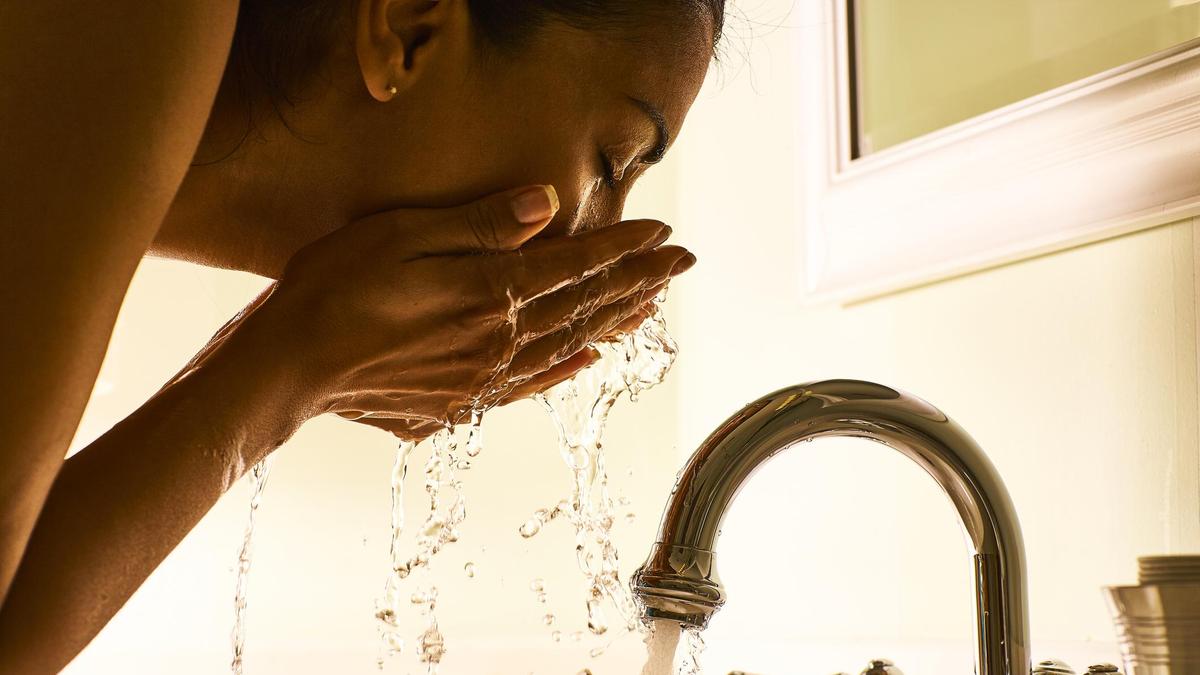
Instead of washing away cleanly, hard water and soap combine to form an insoluble sticky residue, usually referred to as soap scum. This sticky film becomes the root cause of most skin and hair problems. Image used for representational purposes only | Photo Credit: Getty Images
Why is it common to hear people in cities complain of dry skin and lifeless hair despite having access to the best products that can be bought? The reason is, the increasingly hard quality of the water in our urban areas. Dull hair and an inexplicable itchiness of the skin often boil down to a high concentration of dissolved minerals, calcium and magnesium, in our cities’ water supply.
Why is it common to hear people in cities complain of dry skin and lifeless hair despite having access to the best products that can be bought? The reason is, the increasingly hard quality of the water in our urban areas. Dull hair and an inexplicable itchiness of the skin often boil down to a high concentration of dissolved minerals, calcium and magnesium, in our cities’ water supply.
For those reliant on borewells, or municipal water, hard water poses a genuine dermatological concern. Here’s what you need to know about what’s coming out of your taps and how you can tackle problems caused to your skin and hair.
For those reliant on borewells, or municipal water, hard water poses a genuine dermatological concern. Here’s what you need to know about what’s coming out of your taps and how you can tackle problems caused to your skin and hair.
The water problem
At the core of the issue is the reaction between hard water minerals and soap. Instead of washing away cleanly, hard water and soap combine to form an insoluble sticky residue, usually referred to as soap scum. This sticky film becomes the root cause of most skin and hair problems.
Dryness and itchiness are the first visible symptoms to appear when soap scum damage begins; it disrupts the skin’s natural barrier and strip away natural oils. This leaves the skin feeling tight, looking dull, and often itchy. For individuals managing sensitive conditions including eczema or psoriasis, hard water is a known trigger, leading to increased redness and aggressive flare-ups.
Premature ageing is one of the most devastating effects on the skin as the drying effect, compounded over time, can contribute to loss of skin elasticity – those fine lines, dark spots, crow’s feet and sagging on the jawline and neck, may appear sooner than you’d like.
Hair fall cycles can also start early since hard water damages hair follicles and the scalp. Hard water mixed with shampoo doesn’t wash away fully and cleanly. This results in mineral residue that coats hair strands and builds up around the hair shafts and on the scalp, effectively clogging the follicles. This weakens the roots and hinders healthy growth, often resulting in increased and noticeable hair shedding.
Prevention and repair
We can’t stop using soaps and detergents, and most of us are reliant on the water supply we receive. However, consistent efforts and a strategic approach that addresses the three important factors – water quality, a cleansing routine, and moisture repair –can help your skin and hair.
To prevent the damage, there are two key steps:
Invest in a shower filter: This is the most accessible and affordable solution for city dwellers. A quality shower head filter, using materials such as KDF or Vitamin C, can help neutralise chlorine and reduce some of the mineral load before it hits your body. Remember to diligently change the cartridge once every three to six months, depending on the hardness of your tap water.